Manned Guarding vs Mobile Patrols vs Keyholding: Choosing the Right Cover
Cronos Protection · 7 May 2026
Two businesses on the same industrial estate, with almost identical buildings, can need completely different security arrangements. One needs an officer on site every night. The other would be wasting most of its budget doing the same thing.
The variable is not building size. It is exposure: how many hours nobody is there, how attractive the contents are, how long it takes someone to reach the site, and how much damage can be done before anyone arrives.
This guide sets out what each service actually delivers so you can match the cover to the risk instead of buying by the hour.
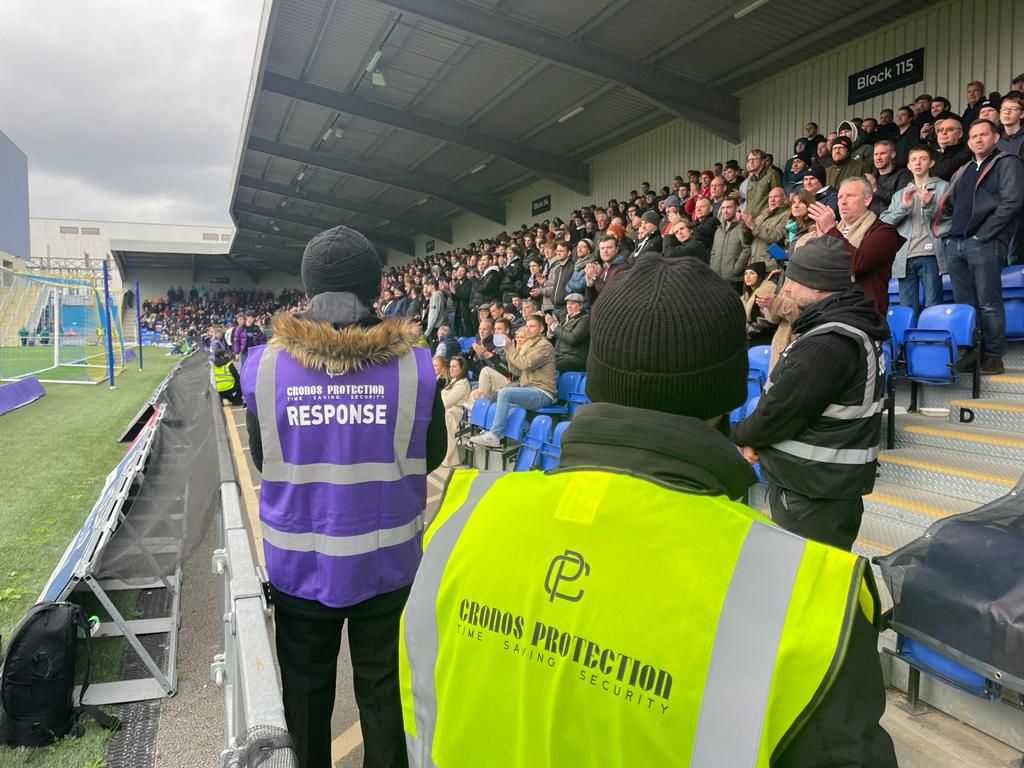
Static manned guarding
An SIA-licensed officer, on your premises, for a defined shift.
What it gives you: continuous presence, immediate response, and something no camera or patrol can provide — judgement in the moment. An officer can challenge a person, refuse entry, de-escalate an argument, direct a delivery, escort a lone worker to their car, check a door that looks wrong, and record all of it.
When it is justified:
- Public-facing premises during trading hours — reception, retail, leisure, licensed venues.
- High-value or high-consequence contents where a successful entry is unacceptable rather than merely expensive.
- Sites with a live history of incidents, trespass or anti-social behaviour.
- Anywhere staff safety is the driver: lone working, late finishes, cash handling, difficult customers.
- Access control that requires a decision — checking credentials, signing people in, controlling contractors.
The trade-off: it is the highest-cost option, because you are paying for every hour whether anything happens or not. That is the correct spend when presence itself is the deterrent, and an expensive habit when it is not.
Mobile patrols
A marked vehicle and an officer visiting your site a set number of times per night, at randomised times, carrying out a defined check on each visit.
What it gives you: visible, unpredictable presence at a fraction of static cost, because the officer''s time is shared across several sites. A good patrol visit is not a drive-past: it is a walked perimeter, doors and windows tested, lighting and fencing checked, plant and stock confirmed present, and a timestamped record produced.
When it is the right choice:
- Multiple sites or units across a town or region — patrols scale where static officers do not.
- Empty premises overnight with moderate loss exposure.
- Sites where you need documented evidence of checks for insurers.
- Combined with monitored cameras, so someone can attend what an operator sees.
The trade-off: patrols are sampling, not coverage. Between visits the site is unattended, and a determined offender who watches a site will find that window. Randomising visit times matters far more than increasing their number, which is why fixed hourly patrols are weaker than they look.
Keyholding and alarm response
A security company holds your keys and attends when your alarm activates, so your staff do not have to.
What it gives you: a trained response at 3am instead of a manager driving out alone to an unknown situation. The responding officer attends, searches, secures, liaises with police if needed, arranges emergency boarding, resets the system and reports back.
When it is the right choice:
- Any premises where an alarm activation currently gets a member of staff out of bed.
- Sites with a low frequency of genuine incidents but a real cost when one occurs.
- Businesses where lone staff attendance is a health-and-safety exposure you would rather not own.
- As the response layer beneath monitored CCTV.
The trade-off: it is reactive by design. It reduces the consequences of an incident rather than the chance of one. It is also the cheapest meaningful layer of protection most businesses can buy, and the one most often missing. We covered it in depth in why your business should consider a keyholding and alarm response service.
Comparing them honestly
Set side by side:
- Deterrence: static highest, patrols moderate and unpredictable, keyholding minimal.
- Coverage: static continuous, patrols intermittent, keyholding event-driven only.
- Cost: static highest, patrols mid, keyholding lowest.
- Response speed: static immediate, patrols depends on where the vehicle is, keyholding a defined attendance window.
- Best at: static — people and decisions; patrols — perimeters and documented checks; keyholding — consequence management.
Work out your exposure first
Before asking for prices, answer five questions about your own premises:
- How many hours a week is nobody there? Count them. Most businesses are surprised — a standard 8am to 6pm operation is unoccupied for over 100 hours a week including weekends.
- What would a thief actually take, and how easily is it moved? Tooling, catalytic converters, cable, alcohol, laptops and stock in cases go quickly. Fixed plant does not.
- What does an incident actually cost? Not just the stolen item: the broken door, the lost trading day, the insurance excess, the premium increase, the staff who no longer feel safe.
- How long until someone arrives? If your nearest keyholder is 40 minutes away, that is your real response time.
- Is anybody at risk, or only property? Where staff safety is involved, presence stops being a cost calculation.
Assignment instructions and insurance: the paperwork that decides outcomes
Two documents make more difference to the value you get than the service type you pick.
Assignment instructions are the site-specific written orders for the officer: what to check, in what order, which doors, which alarm panels, what to do on discovering a break-in, who to call at what hour, which areas need two people, what to record. Generic instructions produce generic security. Insist on instructions written for your site and reviewed when anything changes.
Your insurance conditions frequently specify security requirements — patrol frequency, keyholding arrangements, alarm maintenance, waking watch on certain buildings. Non-compliance can affect a claim at the worst possible moment. Read the conditions and make sure your supplier''s contract matches them.
The combinations that usually work
Most real-world answers are layered rather than a single choice.
- Single trade unit, low-value stock: monitored alarm plus keyholding and alarm response.
- Trade counter or warehouse with moveable stock: patrols nightly at randomised times, plus keyholding.
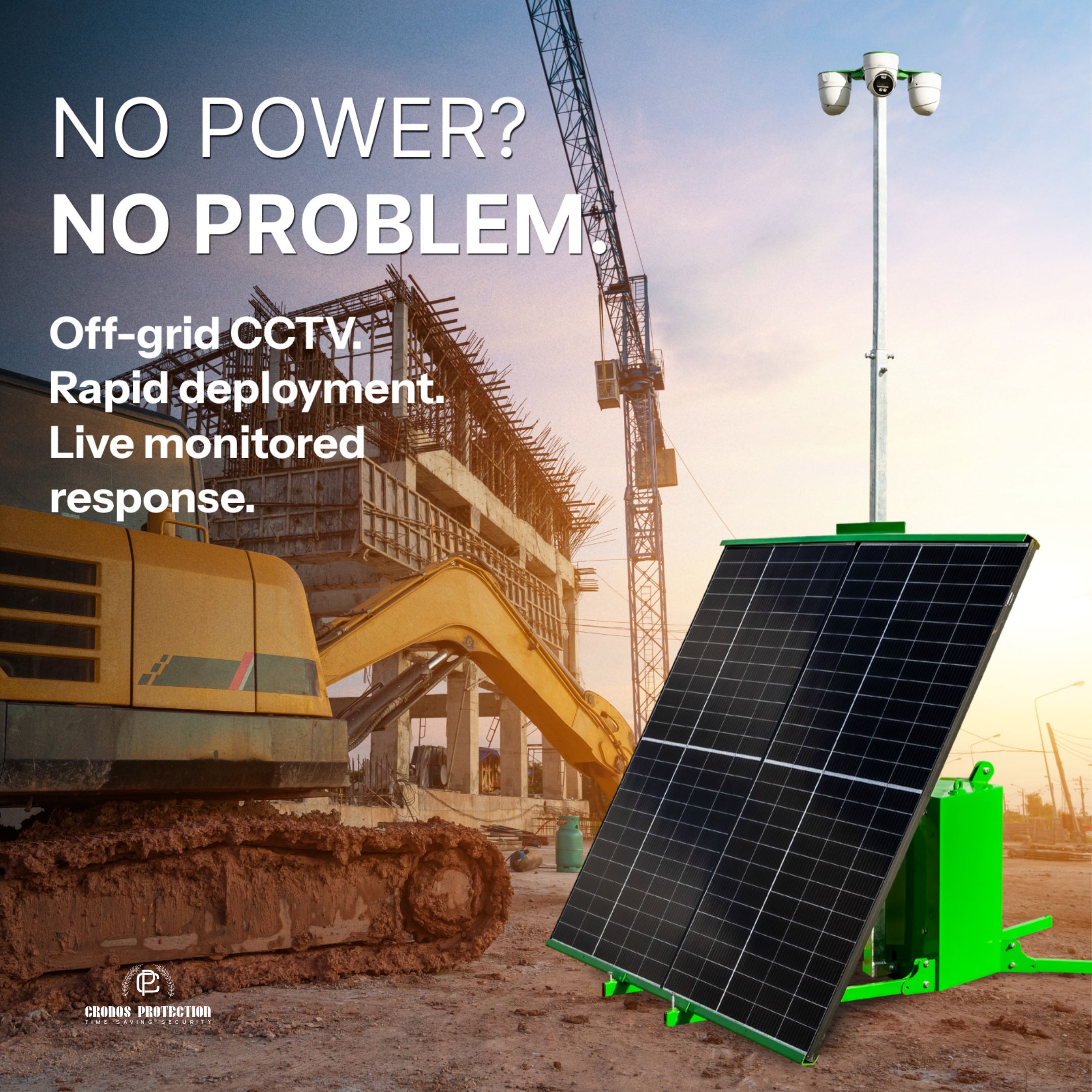
- Construction or development site: solar CCTV towers with monitoring, patrols, and K9 units on larger footprints. See what actually deters crime with CCTV.
- Public-facing premises: static officers or SIA door supervisors during trading, keyholding out of hours.
- Multi-site estate: patrols across the portfolio, static cover only at the highest-risk sites, keyholding everywhere.
Getting it specified properly
A supplier who quotes without visiting is quoting for a generic building, not yours. Any decent provider will walk the site, count the unoccupied hours, look at your fencing, lighting, doors and alarm, and tell you where the money is best spent — including where you are currently spending too much.
Cronos Protection provides static guarding, mobile patrols, keyholding and alarm response across Surrey, Kent, Essex, London and the South East, with COP 119-accredited, BS 7858-screened officers. Request a quote and we will give you a written recommendation you can compare.