Most businesses that have been burgled had CCTV.
That single fact explains almost everything about how CCTV is bought and why it so often disappoints. Cameras are treated as a deterrent when most of them are, in reality, a recording device — useful the morning after, useless at the moment it matters.
The difference between the two is not camera quality. It is whether anybody is watching, and whether anybody can respond.
Recorded versus monitored: the distinction that decides everything
Recorded CCTV captures footage to a local recorder or the cloud. Nobody sees it in real time. Its value is evidential: insurance claims, police investigations, disciplinary matters, disputed accident claims. That value is real, but it is retrospective.
Monitored CCTV is watched — either continuously or by exception, where analytics or detectors trigger an alert and a human being looks at the live image within seconds. At that point somebody can make a decision: issue a live audio challenge over a speaker, call keyholders, call the police with a confirmed crime in progress, or dismiss it as a fox.
Intruders behave very differently when a voice addresses them by description. A great many attempts end at that point, before any loss occurs.
What "verified response" means for police attendance
An alarm activation on its own is an unconfirmed event, and unconfirmed activations sit low in the queue — as they should, given how many are false. A monitored camera changes the nature of the call: an operator watching a live feed can report a confirmed intrusion with a description of the offenders and what they are doing. That is a materially different call, and it is the strongest practical argument for monitoring over recording.
Where CCTV is genuinely the right tool
Cameras are excellent at a specific set of jobs:
- Large perimeters with few people — compounds, yards, storage, plant hire, solar farms, agricultural sites.
- Unmanned hours — the 14 to 16 hours a day, plus weekends, when nobody is on site at all.
- Deterring repeat offenders — targeted sites are usually revisited, and a documented live challenge changes the calculation for a returning offender.
- Evidence for prosecution and claims — clear, correctly timestamped, retained footage.
- Vehicle control — ANPR on car parks, delivery yards, gated compounds and sites with access restrictions.
They are considerably weaker at three things: physically preventing entry, managing people who are already inside and behaving badly, and making judgement calls in an ambiguous situation. That is where officers come in.
Solar and rapid-deploy towers: security where there is no power
Construction sites, land under development, festival builds, temporary compounds and rural yards share a problem: the security requirement arrives long before mains power and permanent infrastructure do.
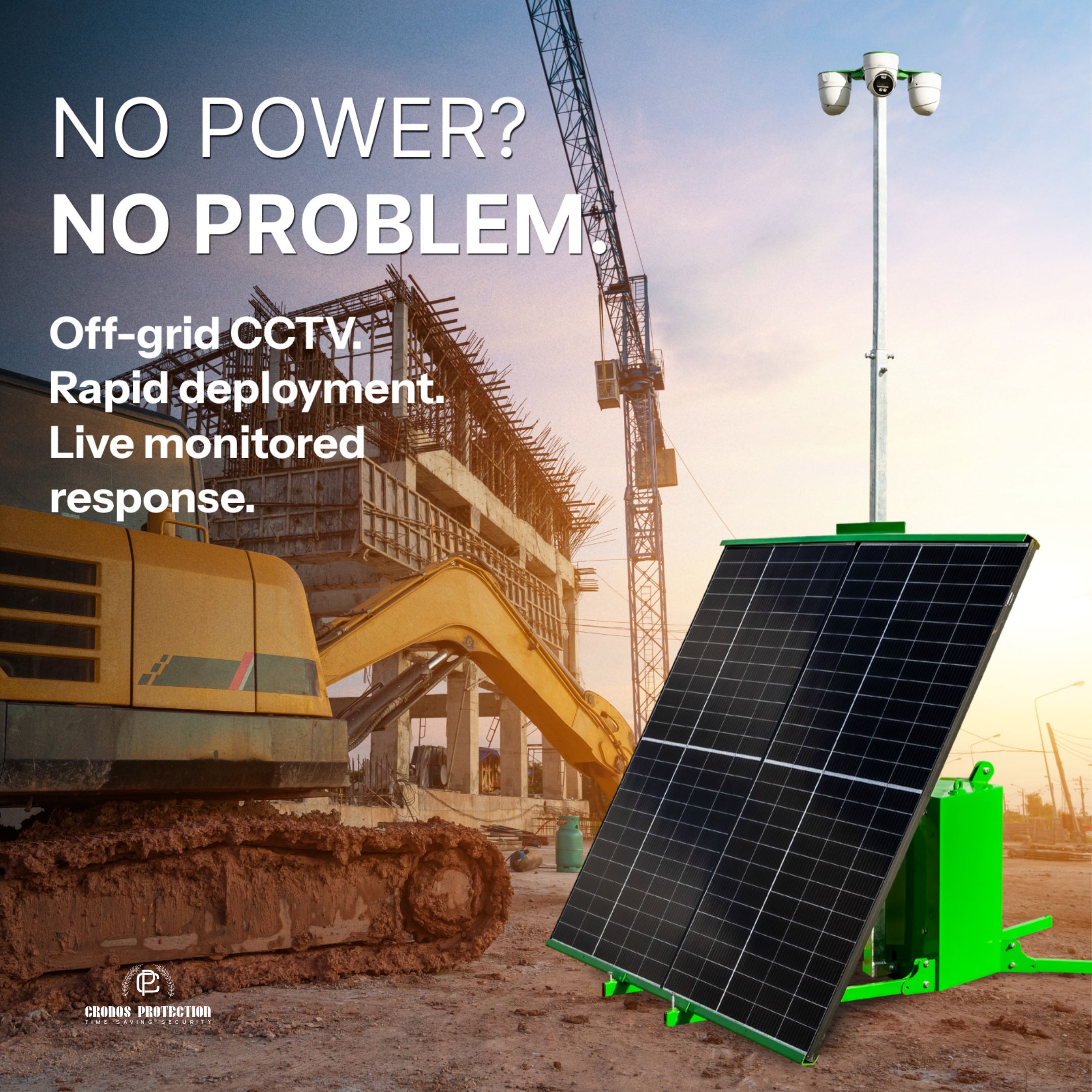
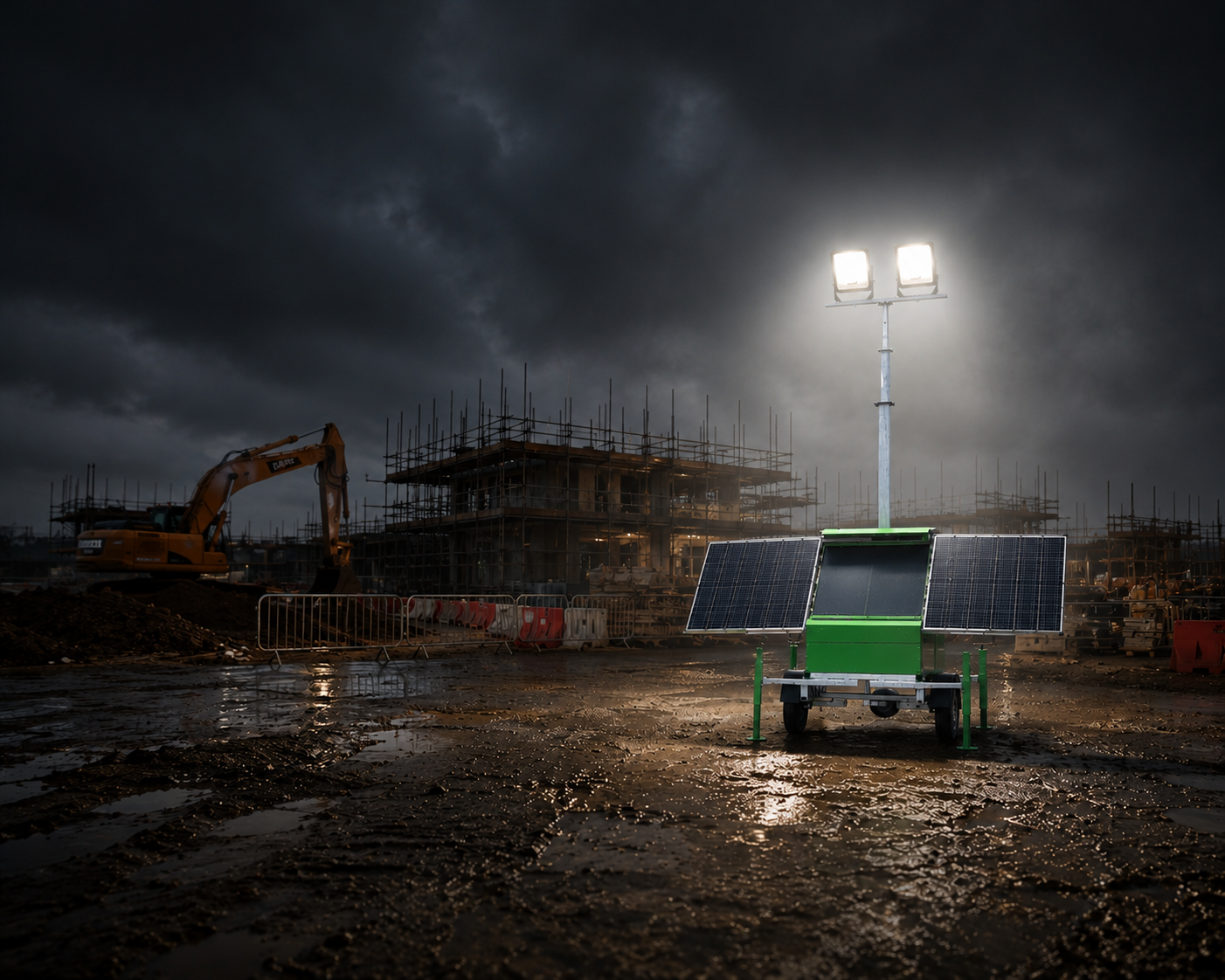
Solar-powered, rapid-deployment CCTV towers exist for exactly this. A tower is typically:
- Free-standing and relocatable as the site layout changes, phase by phase.
- Powered by solar with battery back-up, so no groundworks or supply are needed.
- Connected over mobile data, feeding a remote monitoring centre.
- Fitted with detection analytics and, usually, live audio challenge.
- Raised, which matters — height gives coverage and puts the unit out of easy reach.
On a phased development, towers can be moved to follow the risk: perimeter and plant during groundworks, then materials compounds and stored fit-out goods as the build progresses. Copper, cable, tooling and heating equipment are stolen at the point where the site is most valuable and least finished.
We cover the wider approach to site protection in manned security and K9 units for construction sites.
ANPR, car parks and access control
Automatic number plate recognition changes CCTV from passive observation into an access decision. Common uses:
- Logging every vehicle entering and leaving a compound, with a searchable record by plate.
- Flagging vehicles associated with previous incidents so an operator or officer is alerted on arrival.
- Managing staff and contractor parking without a manned barrier.
- Supporting retail and leisure sites with parking enforcement evidence.
ANPR data is personal data. It needs the same lawful basis, retention limit and access control as any other personal data you hold — see below.
Your legal duties as a camera operator
Operating CCTV in the UK makes you a data controller under UK GDPR and the Data Protection Act 2018. The practical obligations that businesses most often miss:
- Signage. Clear signs telling people the area is monitored, who is operating the cameras and how to contact them. Covert recording is a very narrow exception requiring specific justification.
- A defined purpose. "Crime prevention and the safety of staff and visitors" is a legitimate purpose. Casual monitoring of staff productivity is not, and cameras aimed at rest areas or washrooms are indefensible.
- Retention limits. Keep footage only as long as you need it — typically days or weeks, not indefinitely — and be able to say what your retention period is and why.
- Subject access. Individuals can request footage of themselves. You need a process for locating it, redacting third parties and responding within the statutory timeframe.
- Access control. Who can view live and recorded images, on what authority, and is that logged?
- Coverage limits. Cameras should be positioned to cover your property, not to survey neighbours'' gardens, windows or the public street beyond what is necessary.
Where a third party monitors on your behalf, get the data-processing arrangement in writing. It should cover who may view images, how long they are held, how access is logged and what happens to footage when the contract ends.
Cameras and officers together
The strongest arrangements use each for what it is good at. A worked example on a mid-sized commercial site:
- Monitored cameras cover the perimeter and yard overnight, with live audio challenge.
- A mobile patrol makes randomised visits, so presence is unpredictable rather than scheduled.
- A keyholding and alarm-response agreement means somebody attends a confirmed activation — see why businesses should consider keyholding and alarm response.
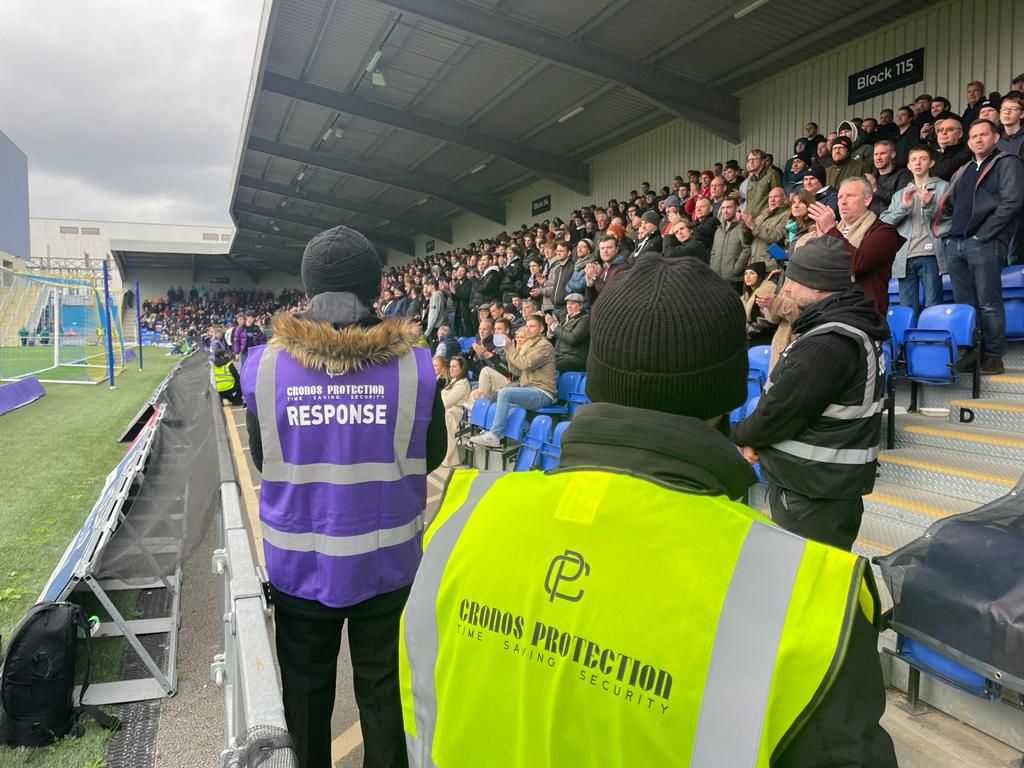
- A static officer covers the hours of highest exposure — deliveries, shift change, public access.
- K9 units cover large open areas where a single officer cannot search effectively.
Cameras extend how much one person can see. They do not replace the person.
Buying questions worth asking
- Is the system monitored, and by whom — during which hours, and at which monitoring centre?
- Is live audio challenge included, and can I hear a recording of one?
- What is the escalation procedure on a confirmed intrusion, and who is called in what order?
- What resolution and frame rate is recorded, and is it enough to identify a face at the distances on my site?
- How long is footage retained, where is it stored, and how do I request a clip?
- Who holds the CCTV operator licences for anyone monitoring public space?
- On a temporary site: how quickly can towers be deployed and relocated, and what happens on a run of dull winter days?
Getting the balance right for your site
The right answer depends on the size of the perimeter, the hours nobody is there, what a thief would actually take, and how quickly somebody can attend. That is a site-specific judgement, and it is worth half an hour with someone who does it for a living.
Cronos Protection designs combined camera and officer solutions across Surrey, Kent, Essex, London and the South East. Request a quote and we will walk the site with you.