Mobile CCTV Towers for Building Sites Void Properties and Remote Locations
Temporary and remote sites can become vulnerable as soon as workers leave. Building materials, tools, plant, fuel and cable may remain on site overnight. Empty car parks and void properties can attract trespass, vandalism, fly tipping and antisocial behaviour. Trackways and infrastructure routes may stretch beyond the reach of a fixed security system.
Mobile CCTV towers provide a visible and adaptable way to monitor these locations without waiting for permanent CCTV infrastructure. When the system detects activity, a monitoring team can assess the images and follow the agreed response plan. The result is more than recorded footage. It is an active security measure designed to deter, detect and support a timely response.
The right solution still depends on the site. Camera position, detection zones, power, communications, lighting, response arrangements and data protection must all be planned around the actual risks.
What is a mobile CCTV tower
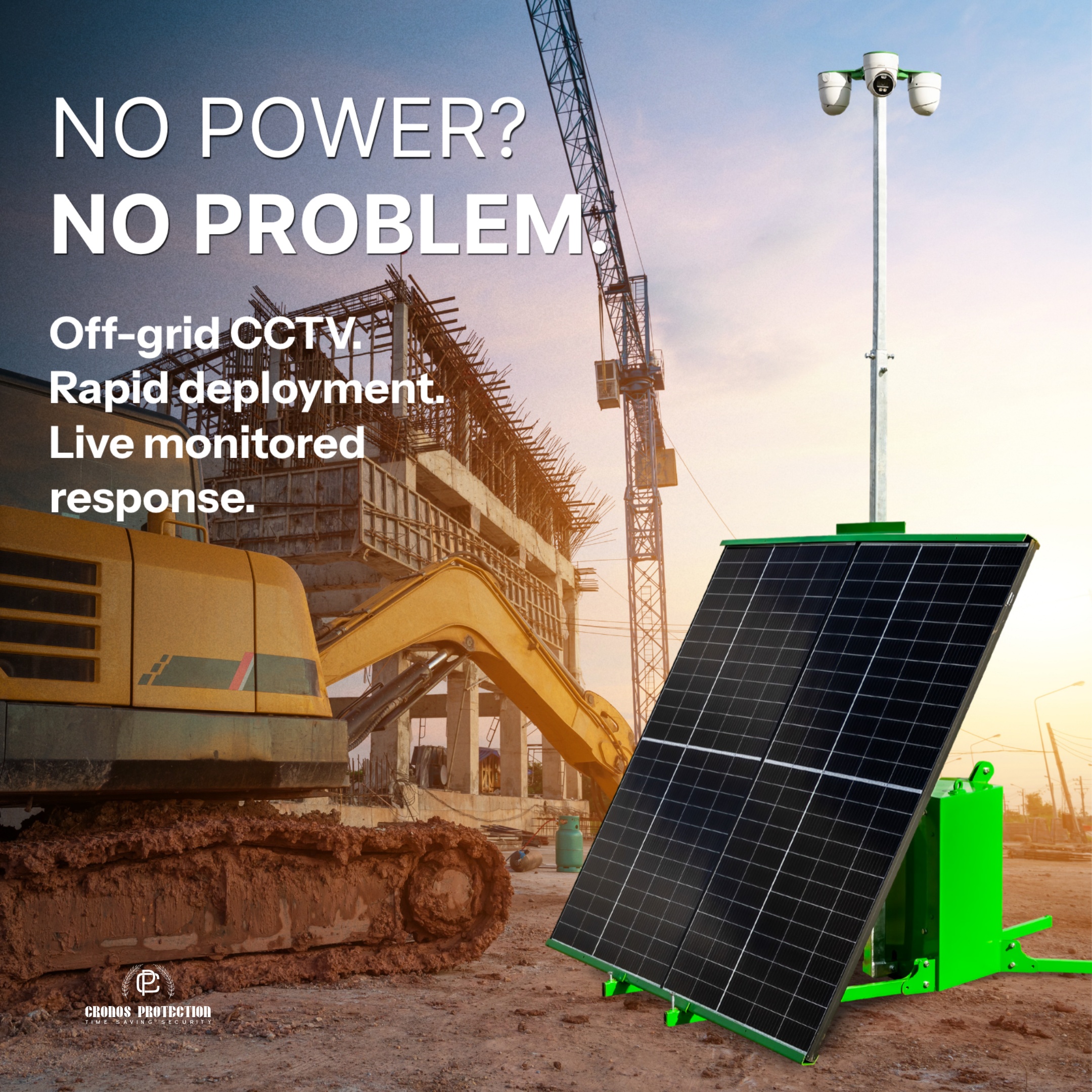
A mobile CCTV tower is a relocatable surveillance unit designed for temporary, changing or hard-to-connect locations. Depending on the specification, a tower may combine high-definition cameras, movement detection, audio warnings, lighting, wireless communications and remote monitoring. Solar-supported options can reduce reliance on mains electricity, making deployment practical where power has not yet been installed or has been disconnected.
The tower creates a prominent security presence and gives cameras an elevated view across access points, compounds, boundaries and vulnerable assets. Because it can be moved as the risk changes, coverage can follow the different phases of a construction project or be repositioned when a site layout, stock area or temporary roadway changes.
How monitored mobile CCTV works
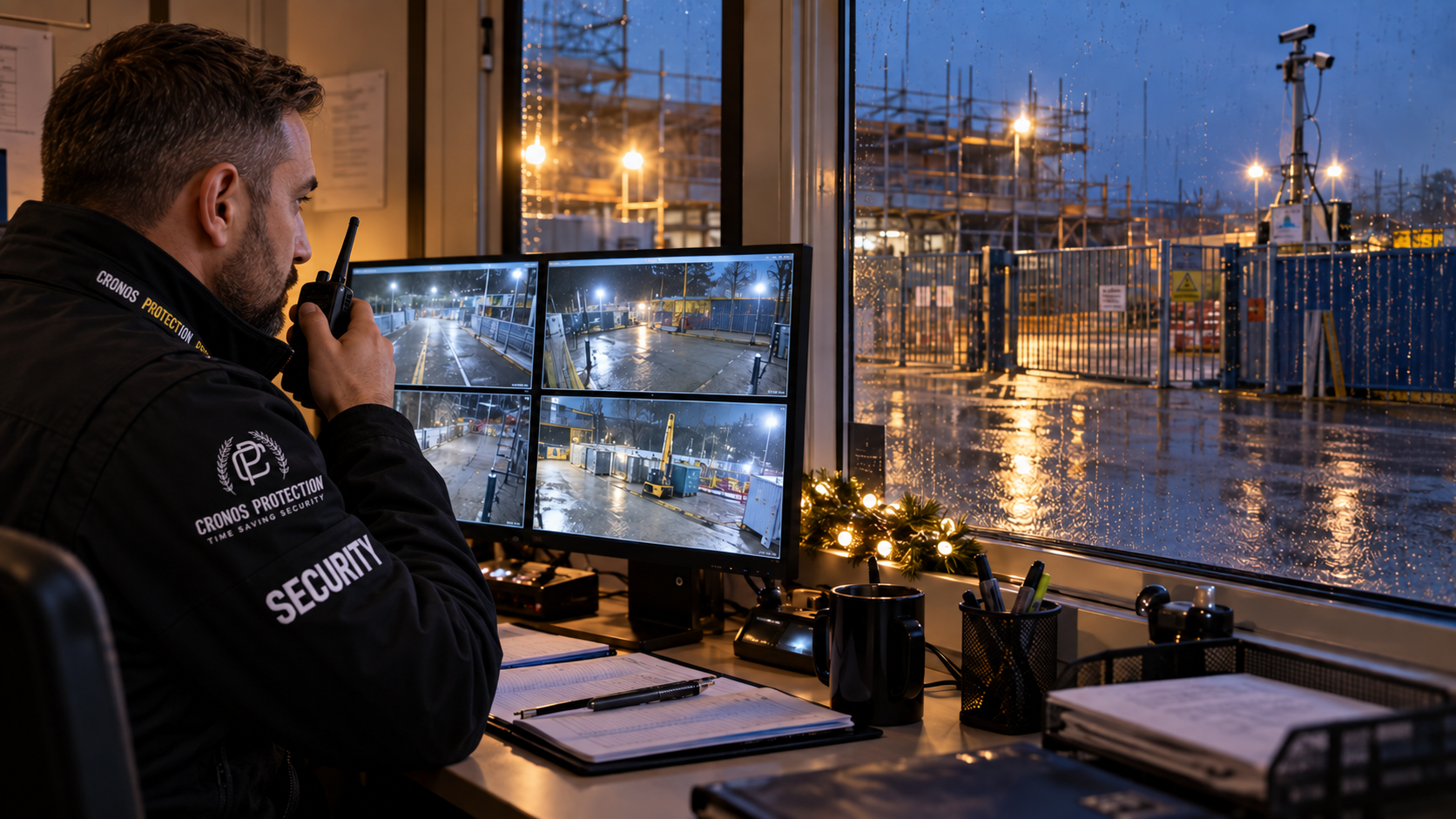
A well-designed system focuses on defined areas rather than treating every movement as an emergency. Detection technology identifies activity within the agreed zone and sends an alert to the monitoring team. An operator reviews the live or recorded images, distinguishes a genuine concern from routine movement and takes the action set out in the site response plan.
The response may include a live audio challenge, contacting the site manager or keyholder, dispatching a mobile response officer, or escalating a confirmed incident to the emergency services when appropriate. The exact sequence should be agreed before deployment, with current contact details and clear authority for each decision.
This verification stage matters. An alarm without useful images can create uncertainty, while clear visual information helps the response team understand what is happening, where it is happening and whether people or valuable assets are at immediate risk.
Building sites and construction projects
Construction sites are rarely static. Hoarding moves, scaffolding rises, compounds relocate and new access points appear as work progresses. A fixed camera installed for the first phase may be looking in the wrong direction several weeks later. Mobile CCTV towers can be repositioned to protect the areas presenting the greatest current risk.
Common priorities include entrances, plant compounds, fuel stores, material deliveries, tool storage, scaffolding access and unfinished buildings. A tower can also help site management review reported incidents and identify patterns around unauthorised access. CCTV should sit within a layered plan that also considers hoarding, gates, locks, lighting, asset marking, access control and physical patrols where the risk requires them.
Empty car parks and vehicle storage areas
An empty or lightly used car park can appear unprotected, particularly overnight or during a closure. It may attract unauthorised parking, vehicle crime, gatherings, fly tipping or attempts to access neighbouring premises. A temporary CCTV tower creates an obvious deterrent while monitoring entrances, pedestrian routes and vulnerable boundaries.
For vehicle compounds or overflow parking, the design should consider number plates, vehicle entrances and the route people take after leaving a vehicle. Cameras must be positioned to capture useful images without unnecessarily overlooking homes, public areas or neighbouring land. Lighting and signage should support the system rather than create glare or leave blind spots.
Void properties and vacant buildings
A property can become a target soon after it is vacated. Empty offices, residential blocks, retail units and industrial buildings may face break-ins, theft of copper and fixtures, squatting, vandalism, arson or water damage that goes unnoticed. The absence of normal staff and visitors also makes suspicious activity less likely to be challenged.
A mobile tower can cover the perimeter and principal approaches while monitored alarms or internal detection protect entry points and sensitive rooms. The plan should consider fire risk, utilities, letterboxes, roof or scaffold access, nearby vegetation and evidence that someone has tested the boundary. Regular site inspections may still be needed for insurance, maintenance and safety purposes.
Trackways temporary roads and infrastructure routes
Temporary access roads, trackways and infrastructure corridors create a different challenge. The assets may be spread over a long distance, used only at certain times or located beyond normal street lighting. Cable, fuel, barriers, machinery and stored materials can be difficult to watch from one position.
A site survey can identify the points where a tower will have the greatest effect: entrances, junctions, compounds, delivery areas, crossings and sections hidden from occupied buildings. As the route develops, units can be relocated or additional coverage introduced. Communications and power resilience must be checked in the actual location rather than assumed from a map.
Other suitable locations
Mobile CCTV towers can also support security at demolition projects, utilities works, renewable energy sites, logistics yards, events during build and breakdown, temporary storage areas and land affected by repeated trespass or fly tipping. They are particularly useful when the requirement is urgent, the site has no permanent system or the security risk will move over time.
The benefits of mobile CCTV towers
Visible deterrence that makes surveillance clear before an intruder enters the site.
Rapid deployment without waiting for a permanent CCTV installation.
Flexible positioning as access routes, stock and risk areas change.
Remote monitoring that can verify activity and trigger an agreed response.
Elevated camera views across wide compounds, boundaries and approaches.
Options for sites with limited mains power or fixed communications.
Recorded evidence to support incident review and investigation.
Integration with lighting, audio challenge, mobile response and manned guarding.
What to consider before hiring a CCTV tower
The number of towers should never be chosen from acreage alone. Buildings, containers, machinery, changes in level, vegetation and hoarding can obstruct the view. One correctly positioned unit may cover a compact site, while a long or divided location may need several detection points. A professional survey should establish:
the assets, people and areas requiring protection;
likely intrusion routes and previous incident patterns;
camera fields of view, blind spots and detection boundaries;
day and night image requirements, lighting and glare;
power, battery, solar exposure and communications resilience;
working hours, authorised activity and how false alerts will be reduced;
who monitors the system and what happens after a verified activation;
safe installation, anti-tamper measures and access for maintenance; and
the controller, retention period, signage and handling of recorded images.
The system should be reviewed whenever the site layout or risk changes. On a construction project, that may mean moving the tower after a new building blocks its view, changing detection schedules when shifts are extended or protecting a new high-value delivery.
CCTV and data protection responsibilities
CCTV footage of identifiable people is personal data. Organisations using surveillance must comply with UK data protection law. The Information Commissioner’s Office advises organisations to identify and document a lawful basis, be transparent, collect only what is necessary, set an appropriate retention period and store footage securely.
People should normally be told they may be recorded through clear, visible signage. Access to recordings must be controlled, and the system should be used only for its stated purpose. The organisation responsible for the CCTV should also understand how it will handle requests from people whose images have been recorded. Camera angles should be limited to the area that genuinely needs protection wherever possible.
These requirements are part of a professional deployment, not an administrative afterthought. Responsibility for the data must be clear between the client, installer, monitoring provider and any other party handling footage.
Mobile CCTV or a security officer
The answer is often not either or. A monitored tower provides continuous observation of selected areas and can remain alert when a large site is quiet. A security officer can patrol beyond the camera view, inspect a concern at close range, manage access, check doors and gates, and respond to changing conditions.
Lower-risk sites may be suitable for CCTV with keyholding or mobile response. Higher-risk locations may need cameras alongside manned guarding, K9 patrols or access control. The best arrangement is the one supported by the risk assessment, response time, site design, insurance conditions and value of the assets being protected.
Mobile CCTV towers from Cronos Protection
Cronos Protection provides solar-powered mobile CCTV towers and site technology solutions for construction sites, vacant properties, infrastructure projects, car parks and remote locations. Our units combine visible deterrence, intelligent detection and remote monitoring to provide practical protection where permanent surveillance is not suitable.
We assess the location, identify priority areas and agree how alerts will be monitored and escalated. As requirements change, the security plan can combine technology with mobile response, keyholding or manned security for a proportionate, layered solution.
Need temporary CCTV for a vulnerable site? Contact Cronos Protection for a bespoke site assessment and quotation.
Frequently Asked Questions
Do mobile CCTV towers need mains electricity
Not always. Solar-supported and self-contained units can operate where mains power is unavailable, although suitability depends on the equipment, location, expected demand and available solar exposure. Power and communications should be checked during the site survey.
Can a mobile CCTV tower be monitored remotely
Yes. A monitored system can send alerts and images to trained operators, who assess the activity and follow the agreed response plan. Clients should confirm the monitoring hours, verification process and escalation arrangements.
How many CCTV towers does a building site need
There is no reliable universal ratio. The correct number depends on the layout, obstructions, access points, assets, camera range, lighting and risk. A survey should identify the required fields of view and any blind spots.
Are CCTV towers suitable for void properties
They can be highly effective for monitoring the perimeter, approaches and external access points of vacant buildings. Internal alarms, property inspections, locks, boarding or guarding may also be required depending on the risk.
Can mobile CCTV replace security guards
It can reduce or reshape the need for static guarding on some sites, but it cannot carry out every physical task. Higher-risk locations often benefit from CCTV combined with keyholding, mobile response, access control or on-site officers.
What happens when a CCTV tower detects an intruder
The monitoring team reviews the alert and follows the agreed plan. This may involve an audio warning, contacting a keyholder, dispatching a response officer or escalating a confirmed emergency. The process should be documented before the system goes live.