Christmas, Holiday and Bad Weather Cover: How to Protect Building Sites During the Winter Shutdown
The Christmas shutdown gives construction teams a well-earned break, but it can leave building sites exposed at one of the most difficult times of year. Fewer workers are nearby, normal routines stop, suppliers close, nights are long and bad weather can damage fencing, alarms, temporary structures and access routes.
A site that appears quiet and unattended may attract trespass, theft, vandalism, arson or unauthorised occupation. Storms, heavy rain, ice and freezing temperatures can create a second set of problems, from loose hoarding and flooding to power failures and false alarms. Without a clear response plan, a minor issue on Christmas Eve can remain unnoticed until work resumes in January.
Effective Christmas building site security combines a thorough shutdown, visible deterrence, monitored technology and people who can attend when something changes. This guide explains how to protect plant, materials, buildings and neighbouring property throughout the holiday period.
Why the Christmas shutdown changes your risk
Security measures that work during a normal working week may not be enough when a site closes for ten days or more. Regular deliveries and workforce activity normally create informal surveillance. During the shutdown, predictable periods of low activity give offenders more time to observe the site and test its defences.
Winter weather can also expose weaknesses that were not obvious during daily operations. Wind may loosen fencing or scaffold sheeting. Rain can overwhelm drainage or reach electrical equipment. Ice can make routes unsafe for anyone responding to an alarm. A holiday security plan therefore needs to address both deliberate intrusion and weather-related damage.
Start with a Christmas shutdown risk assessment
Review the site before the final shift leaves. Record high-value assets, vulnerable boundaries, incomplete structures, temporary power, fuel, hazardous materials, water risks and areas that cannot be seen from public roads or existing cameras. Consider how the risk changes at night, at weekends and during forecast bad weather.
The assessment should assign responsibility for closing the site, monitoring it, responding to alerts and authorising emergency work. Confirm who can make decisions if the usual project manager is unavailable. Contact lists must be current and accessible to the security provider, not stored only in a closed site office.
Complete a disciplined final-day shutdown
The last working day before Christmas is busy and mistakes are easy to make. Use a written checklist and allow enough time to secure the site properly. Do not rely on a quick walk-round after tools have been packed away.
Remove portable tools, small plant, fuels and valuable materials where practical.
Immobilise larger plant, secure keys separately and use approved physical protection.
Lock stores, compounds, cabins and access points; replace weak or damaged locks.
Clear ladders, pallets, skips and equipment that could help someone climb the perimeter.
Secure loose materials, sheeting, signage and temporary structures against forecast wind.
Check drainage, pumps, temporary roofs and any known water-entry points.
Isolate services only where the project plan and competent persons confirm it is safe.
Test CCTV, alarms, lighting, communications and backup power.
Photograph the condition of the site and record who completed the final check.
Keep emergency access available for authorised responders and emergency services. Security must never obstruct required escape routes or create new safety risks.
Strengthen the perimeter and access points
Hoarding, fencing and gates should form a clear, continuous boundary. Repair gaps, loose panels and ground-level weaknesses before the shutdown. Check whether nearby walls, roofs, scaffolds or street furniture provide an alternative route into the site.
Use the fewest access points practical and secure secondary gates. Lighting should support safe attendance and usable CCTV images without causing unnecessary nuisance to neighbours. Signs can reinforce that the site is monitored and that entry is restricted, but signs must be backed by working measures and a real response.
Protect plant, materials and unfinished buildings
Copper, cable, tools, fuel, batteries and compact plant are attractive because they can be removed quickly. Move high-value items away from the perimeter and out of public view. Use locked internal compounds or containers and layer physical security so that one defeated lock does not provide immediate access to everything.
Record serial numbers and maintain an up-to-date asset list. Where suitable, tracking devices, immobilisers and forensic marking can support deterrence and recovery. Do not leave keys, access fobs or fuel cards in site cabins.
Partially completed buildings also need attention. Secure openings at ground level, protect completed finishes from water ingress and restrict access to areas with fall, fire or structural hazards. An intruder does not understand the site, so conditions that trained workers manage safely can become extremely dangerous after unauthorised entry.
Use guarding, patrols and monitored CCTV together
Recorded CCTV may help after an incident, but Christmas cover should be designed to identify and respond to suspicious activity while it is happening. Cameras should cover the perimeter, gates, compounds, access routes and high-value areas. Analytics and remote monitoring can help operators verify movement and follow an agreed escalation plan.
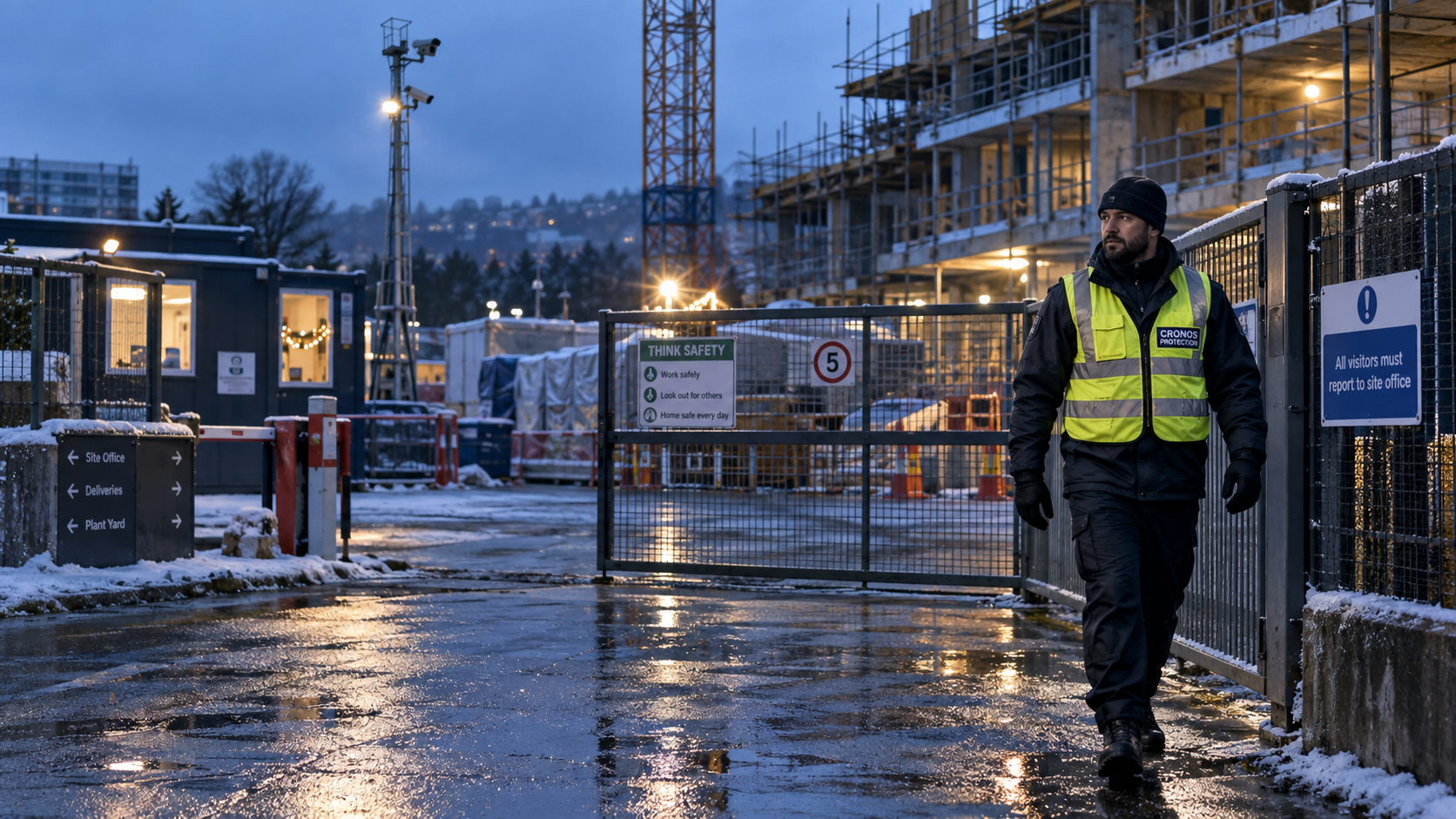
A visible security officer adds deterrence, judgement and the ability to inspect issues that technology cannot fully explain. Depending on risk, the right arrangement may be a permanent officer, scheduled mobile patrols, a K9 team, remote monitoring or a combination. Patrol timings should not be so predictable that they create a known gap.
Cronos Protection can combine manned guarding, K9 units and site technology solutions into one site-specific holiday security plan.
Plan bad-weather inspections and response
Monitor official forecasts and weather warnings throughout the closure. Set clear triggers for additional checks, such as a named storm, strong wind, prolonged heavy rain, snow, freezing conditions or a local flood alert. The trigger should state who checks the site, when it is safe to attend and what must be inspected.
After severe weather, an authorised responder may need to check fences, hoarding, scaffold alarms, temporary roofs, drainage, pumps, power supplies and signs of water entry. Any visit must respect the construction phase plan and site hazards. Security officers should not be asked to carry out technical repairs or enter unsafe areas; their role is to observe, protect the scene, report accurately and escalate to the competent contractor or emergency service.
If access roads are flooded or icy, attendance may take longer or become unsafe. Build that possibility into the response plan and identify alternative access, local contacts and remote verification options before the holiday begins.
Arrange keyholding and alarm response
Do not make an employee attend an alarm alone at 3am over Christmas. A professional keyholding arrangement provides a trained first response, protects staff from entering an uncertain situation and helps the site manager receive clear information without travelling unnecessarily.
The responder needs accurate keys or codes, site instructions, hazard information, escalation contacts and authority limits. Agree what happens after forced entry, storm damage, flooding, fire, alarm failure or an insecure boundary. If a door or fence cannot be repaired immediately, the plan should allow temporary guarding until the site is made secure.
Read more about Cronos Protection’s keyholding and alarm response service.
Keep neighbours and emergency contacts in the loop
A trusted neighbouring business or resident may notice noise, damage or unusual vehicles before a remote team does. Provide a suitable contact route, but do not expect neighbours to investigate. Make sure displayed emergency details do not reveal private mobile numbers or useful information about when the site is unattended.
Tell the alarm receiving centre and security provider about shutdown dates, authorised visitors and planned contractor attendance. Unexpected activity can then be challenged rather than mistaken for scheduled work.
A practical Christmas site security checklist
Complete and document a holiday-specific security and weather risk assessment.
Confirm shutdown dates, authorised visitors and emergency decision-makers.
Secure plant, tools, fuels, materials, keys and site records.
Repair and inspect hoarding, fences, gates, locks and lighting.
Test alarms, CCTV, remote monitoring, communications and backup power.
Agree guarding or patrol coverage for the whole closure.
Set weather-warning triggers and safe post-storm inspection procedures.
Provide responders with keys, codes, hazards, plans and current contacts.
Prepare temporary guarding and emergency repair options.
Record a final handover and schedule a reopening inspection.
Christmas and winter site cover across Surrey, London and the UK
Holiday security cover works best when it is planned early. Leaving arrangements until the final week can limit officer availability, delay technology deployment and create gaps between the construction team leaving and the security plan starting.
Based in Epsom, Cronos Protection provides professional construction site security in Surrey, London and across the UK. We can review your shutdown risks and deliver a practical combination of SIA-licensed officers, K9 patrols, monitored CCTV, mobile technology, keyholding and incident reporting.
Whether your site closes completely, operates with a reduced team or needs extra cover during bad weather, we will build the service around the project and its actual risks.
Secure your site before the Christmas shutdown. Contact Cronos Protection for a bespoke quote.
Frequently asked questions
How should a building site be secured over Christmas?
Complete a shutdown risk assessment, remove or immobilise valuable assets, repair the perimeter, secure access points, test CCTV and alarms, and arrange monitored response, patrols or guarding for the entire closure.
Should construction sites have security guards during a holiday shutdown?
Higher-risk sites often benefit from on-site officers, K9 teams or mobile patrols. The appropriate coverage depends on location, asset value, previous incidents, the length of closure and how quickly someone must respond.
What should happen after a storm at a closed building site?
Use pre-agreed weather triggers. When it is safe, an authorised responder should check visible boundaries, temporary structures, drainage, alarms and signs of damage, then escalate technical work to a competent contractor.
Can CCTV replace security guards over Christmas?
CCTV can provide effective detection and verification, particularly when remotely monitored, but it must connect to a clear response. Many sites are best protected by combining technology with officers or mobile patrols.
When should Christmas security cover be booked?
Book as early as possible so the provider can assess the site, confirm staffing, deploy technology, test systems and complete a proper handover before the final shift leaves.